

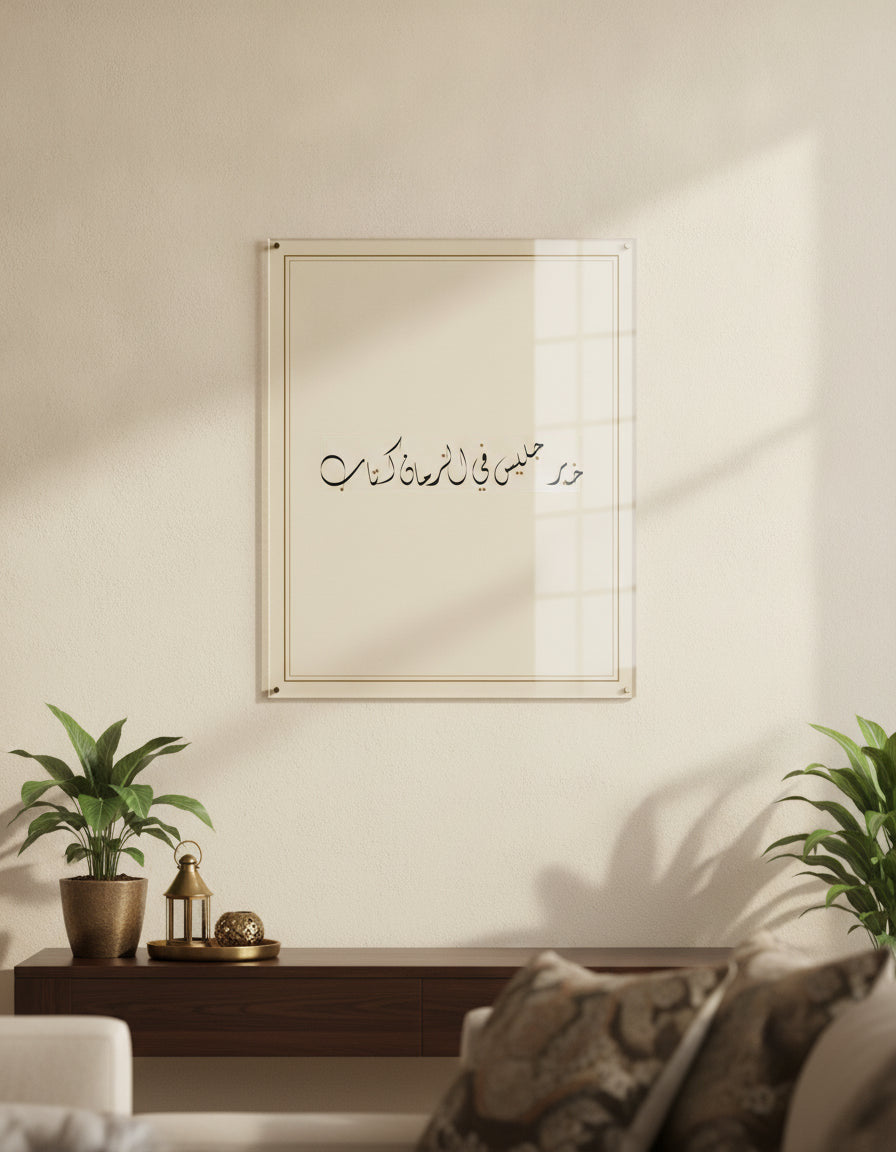
Most of the Arabic sayings people quote as hadith are proverbs. «الجار قبل الدار», «في التأني السلامة», «من جدّ وجد», «القناعة كنز لا يفنى» and «الصبر مفتاح الفرج» are not established as words of the Prophet, and «خير جليس في الزمان كتاب» is half a line by the poet al-Mutanabbi. Their meanings are sound, and for most of them the Qur'an or an authentic hadith says something close. Below, each saying as people complete it, its meaning, and the answer to "is it a hadith?", with the book it comes from.
«الجار قبل الدار»: the neighbour before the house
People complete it «الجار قبل الدار، والرفيق قبل الطريق»: choose the neighbour before the house, and the companion before the road. A version is reported as a hadith, «التمسوا الجار قبل الدار، والرفيق قبل الطريق», but al-Haythami notes in Majma' al-Zawa'id that its chain includes an abandoned narrator, and Dorar.net lists it among popular sayings that are not authentic, adding that its meaning is kind. So it is a proverb. It is not in the Qur'an either, though the neighbour has a clear place there: «والجار ذي القربى والجار الجنب», the near neighbour and the distant neighbour (an-Nisa 4:36). Our «الجار قبل الدار» in Diwani is from AED 60, and suits a family that has just moved; see also Housewarming & New Home.
«في التأني السلامة وفي العجلة الندامة»: safety in taking your time
"In taking your time there is safety, and in haste there is regret." It is a proverb; the Dorar.net hadith encyclopedia has nothing with this wording. The nearest report, «الأناة من الله والعجلة من الشيطان», "deliberateness is from God and haste is from Satan", is in Jami' at-Tirmidhi 2012, where al-Tirmidhi himself calls it gharib and notes that hadith scholars faulted the memory of its narrator; sunnah.com shows it graded da'if (weak) by Darussalam. The authentic word on the subject is the Prophet's praise of a man of the tribe of Abd al-Qays: «إن فيك لخصلتين يحبهما الله الحلم والأناة», "you have two qualities that God loves: forbearance and deliberateness" (Sahih Muslim 18). Our paint carries the first half, «في التأني السلامة» in Diwani, from AED 60.
 «الجار قبل الدار» — Calligraphy Paint
From 65 SR
 «الصبر مفتاح الفرج» — Calligraphy Paint
From 65 SR
 «خير جليس في الزمان كتاب» — Calligraphy Paint
From 65 SR
«من جدّ وجد ومن زرع حصد»: who strives, finds
Often lengthened to «من جدّ وجد، ومن زرع حصد، ومن سار على الدرب وصل»: who strives finds, who sows reaps, who keeps to the road arrives. The hadith scholars say plainly that it is not a hadith: Ibn al-Dayba' wrote "it is not a hadith" in Tamyiz al-Tayyib min al-Khabith, and Mulla Ali al-Qari called it "without basis" in al-Asrar al-Marfu'a. The thought is close to «وأن ليس للإنسان إلا ما سعى», "and that a person has only what he strives for" (an-Najm 53:39). For exam season: «من جدّ وجد» in Diwani, from AED 60.
«القناعة كنز لا يفنى»: who said it?
"Contentment is a treasure that never runs out." It is reported as a hadith from Jabir ibn Abd Allah, and al-Albani graded it very weak (Da'if al-Targhib 500). The authentic hadith with the same heart is «ليس الغنى عن كثرة العرض ولكن الغنى غنى النفس», "wealth is not having many possessions; wealth is a contented soul" (Sahih al-Bukhari 6446, Sahih Muslim 1051). We sell it as what we can stand behind, a proverb: «القناعة كنز لا يفنى» in Diwani, from AED 60.
«الصبر مفتاح الفرج»: hadith or proverb?
"Patience is the key to relief." Al-Daylami recorded it in al-Firdaws as «الصبر مفتاح الفرج، والزهد غنى الأبد», and al-Sakhawi notes in al-Maqasid al-Hasana that it comes without a chain, from al-Husayn ibn Ali. It cannot be called a hadith of the Prophet. The Qur'an says «واستعينوا بالصبر والصلاة», "and seek help through patience and prayer" (al-Baqarah 2:45), and an authentic hadith says that no one is given a gift better or wider than patience (Sahih al-Bukhari 1469). The paint, «الصبر مفتاح الفرج» in Diwani, is from AED 60; more lines on the theme are in On Patience.
«خير جليس في الزمان كتاب»: the whole line
This is poetry, not hadith. It is the second half of a line by al-Mutanabbi (915–965), from his ode «منى كن لي أن البياض خضاب», written in praise of Kafur and 43 lines long in the text on aldiwan.net. The whole line reads:
«أعز مكان في الدنى سرج سابح * وخير جليس في الزمان كتاب»
"The most honoured seat in the world is the saddle of a swift horse, and the best companion in any age is a book." The «سابح» is a horse so fast it seems to swim. The Diwani paint carries the second half, from AED 60.
«العلم نور والجهل ظلام»: knowledge is light
"Knowledge is light, and ignorance is darkness." A proverb heard in every Arab classroom; we found no author to name, and we do not call it a hadith. «العلم نور» in Diwani is from AED 60, and the other lines on learning are in On Knowledge.
How to check a saying yourself
- A hadith comes with a collection and a number, such as "Sahih Muslim 18". If a saying arrives with neither, treat it as a proverb until shown otherwise.
- Search the exact words on Dorar.net, which shows each grading and its book, or on sunnah.com for the major collections.
- On a wall or a card, call a saying what it is. A proverb loses nothing by being a proverb.
Putting one on the wall
All seven are calligraphy paints in Diwani, printed on cotton canvas: A3 rolled from AED 60, A3 framed AED 100, A2 framed AED 195. Each saying also has its own page in Mashq Studio, where you can set it in another script for free, for example «الجار قبل الدار» or «خير جليس في الزمان كتاب».
Quick answers
Is «الجار قبل الدار» a hadith? No. A version is reported as a hadith, but its chain is very weak and Dorar.net lists it among sayings that are not authentic; it is a proverb with a sound meaning.
Is «الصبر مفتاح الفرج» from the Prophet? It is not established as his words: al-Sakhawi notes it is recorded without a chain.
Who wrote «خير جليس في الزمان كتاب»? Al-Mutanabbi, the tenth-century poet; the line begins «أعز مكان في الدنى سرج سابح».
Every paint is made to order in our workshop in 5–7 working days; delivery is by Emirates Post Express.
Keep reading: 43 Arabic Phrases for Wall Art, With Their Meanings · The Meaning Behind Popular Arabic Calligraphy Phrases. To write any of these sayings in the script you like, open Mashq Studio, free.
About this guide: written by MASHQ, which makes Arabic calligraphy pieces to order in its own workshop (1click2open LLC). Attributions are given only where they can be checked, and each grading names the scholar and the book it comes from. Prices were checked against the shop in October 2026.